Word Tiles - Relaxing Puzzle
- 4.9
- Rating
- 1.00M
- Installs
- Free
- Price
 Analysis by App-foxy
I usually turn to a word puzzle when I want something quieter than a fast action game, but I still want enough structure to keep my attention. Word Tiles - Relaxing Puzzle, developed by Agave Games, aims directly at that mood. It is a free puzzle game built around arranging or solving word tiles, and its simple store summary hides the more important question: whether the experience stays relaxing once progress, mistakes, and optional spending enter the picture.
After spending time with it, my impression is that this is best approached as a short-session word game rather than a deep replacement for a traditional crossword app. The appeal is immediate: you can open it, focus on a compact word challenge, and put it down without needing a long explanation. That makes it a natural fit for a commute, a coffee break, or the few minutes before bed. The trade-off is that players looking for broad vocabulary tools, elaborate story content, or a highly competitive ladder may find the format too narrow.
How the word-tile format feels in everyday play
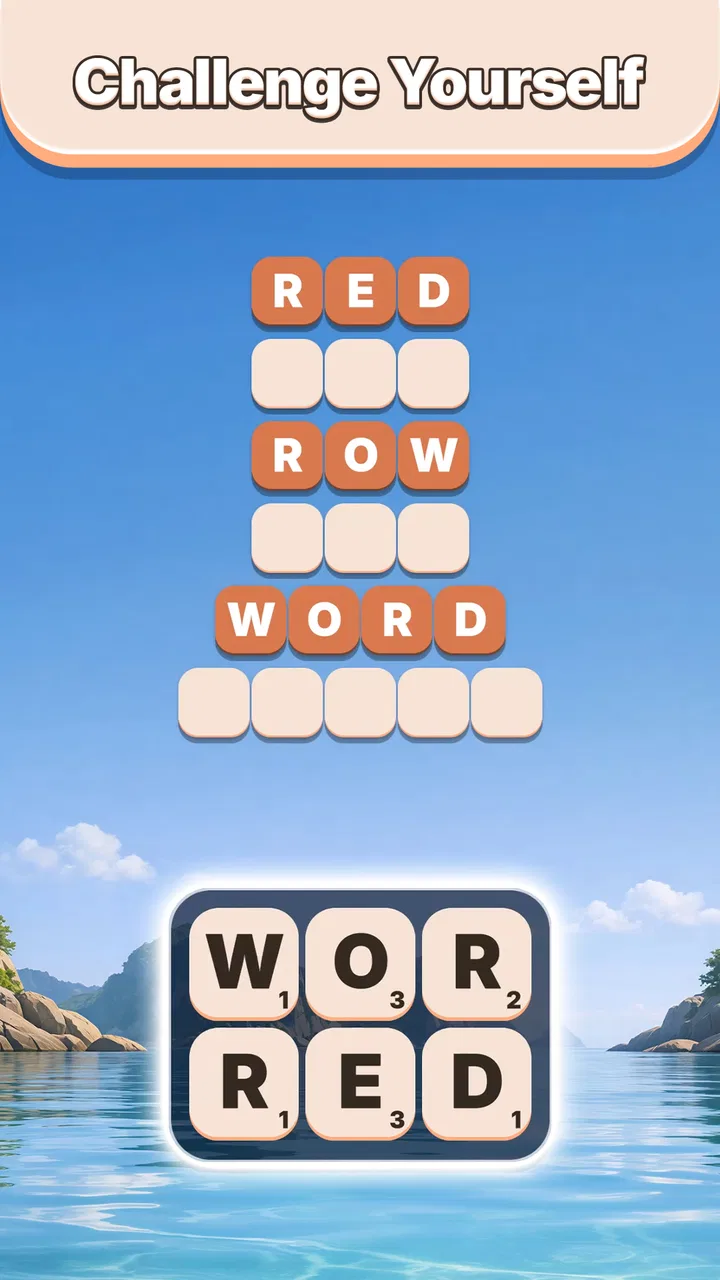
The central idea is easy to understand. You work with tiles representing letters and try to form words, so the game places language recognition and arrangement at the heart of every session. That simplicity is useful because the game does not demand a large learning investment. I could imagine handing it to someone who enjoys casual puzzles but does not normally play games, since the basic purpose is clearer than it is in many larger puzzle titles.
You May Also Like

 Blood Strike: 2.5 Anniversary
Blood Strike’s Loadouts Turn Every Drop Into a Tactical Gamble
A close look at Blood Strike’s custom loadouts: how fast access to signature weapons reshapes its battle royale rhythm, rewards preparation, and narrows the gap between fights.

 Pandora - Music & Podcasts
Pandora’s Music Is Easy to Start, but Harder to Recover
Pandora’s strength is its low-effort path from a seed to a station. Its weak spot is how much confidence it asks you to place in connection, setup, and quiet recovery.

 8 Ball Pool
 Is Built on Rivalries, Rematches, and Routine
A close look at the rivalries, rematches, shared routines, and unanswered safety questions that turn a quick pool match into a persistent mobile community.

 Samsung Music
’s Quiet Strength Is Playing What You Already Own
Its reach comes less from spectacle than from dependable access to a personal library. That simplicity is both the app’s strongest retention engine and its ceiling.

 AccuWeather: Weather Radar
AccuWeather Review: A Quick, Clear Forecast for Everyday Decisions
For everyday plans, the best forecast is the one you can understand quickly. AccuWeather makes rain timing, radar, and local conditions easy to act on, with a few trade-offs.

 Hill Climb Racing
Why Hill Climb Racing Still Turns Crashes Into One More Run
A tiny car, a bumpy hill and one more upgrade: Hill Climb Racing keeps resurfacing because its simple chaos makes every near-miss feel personal.
More From Our News Desk



The relaxing label also sets a particular expectation. This is not the kind of word game I would choose when I want a tense timer, a complicated board, or a long chain of objectives. Its strongest use is as a gentle mental reset. You can concentrate on the letters in front of you, test a possibility, and continue at your own pace. That slower rhythm makes it suitable for players who enjoy wordplay but dislike the pressure found in timed challenges.
At the same time, “relaxing” does not automatically mean effortless. Word puzzles can become surprisingly demanding when the available letters suggest several plausible answers. The satisfying part is narrowing those possibilities down without relying on random tapping. I found that the best sessions came when I treated each board as a small reasoning exercise instead of rushing to clear it.
One practical tip is to avoid locking onto the first familiar word you notice. In a tile-based puzzle, an obvious answer can make you overlook a shorter or differently arranged solution. I prefer scanning the vowels first, then checking common endings and beginnings, and only after that experimenting with less familiar combinations. That habit makes the game feel more like deliberate solving and less like guessing.
The game is also a reasonable choice for shared household use because its Everyone content rating keeps the audience broad. A parent looking for a quiet game for a child, an adult wanting a vocabulary break, or an older player who prefers readable word-based interaction can all understand the premise quickly. Still, the age rating should not be confused with educational depth. It signals broad suitability, not a complete language-learning curriculum.
For someone choosing between this and a crossword app, the difference is mainly in the shape of the challenge. Crosswords usually reward clue interpretation and general knowledge across a larger grid. Word Tiles - Relaxing Puzzle puts more emphasis on the immediate relationship between letters and possible words. If clues frustrate you, that can be an advantage. If you enjoy layered clues, themes, and a sense of filling a full puzzle page, a crossword alternative may offer more variety.
Compared with a competitive word game, this title appears more appealing to players who want control over their pace. Competitive alternatives can create excitement through opponents, rankings, or time limits, but they can also turn a relaxing break into another performance test. Here, the word-tile format is more comfortable for private play. The downside is that people who stay motivated through direct competition may run out of reasons to return once the novelty of solving individual puzzles fades.
What progress feels like when the goal is relaxation
Progress in a casual puzzle game is rarely just about reaching the end. It is also about building a rhythm: open the game, solve a manageable challenge, notice a pattern, and leave feeling that the session was worthwhile. Word Tiles - Relaxing Puzzle benefits from that kind of flexible routine. I would not recommend measuring its value by how quickly you move through it, because doing so works against the calm pace that gives the game its identity.
A realistic everyday scenario would be using it during a short wait at a doctor’s office. You may not have enough time for a full match in a larger game, and you may not want sound, complex controls, or a story that demands attention. A word-tile puzzle can fill that gap without requiring you to remember a plot or coordinate with another player. If the waiting room interrupts you, the activity is also easier to abandon than a long-form strategy session.
There is a useful mental distinction between progress and pressure. Progress is the feeling that your solving ability is improving. Pressure comes from believing you must complete a board immediately, preserve a streak, or spend money to avoid a setback. I recommend treating each puzzle as a self-contained exercise. That approach protects the relaxing quality and makes mistakes less irritating.
The potential friction is that casual puzzle games can become repetitive when the underlying action remains nearly identical from one challenge to the next. Word Tiles - Relaxing Puzzle has a focused concept, and focus is both its strength and its limitation. Players who enjoy polishing the same type of skill may appreciate that consistency. Players who need changing mechanics, exploration, or a strong narrative arc should look elsewhere.
Another tip is to play in deliberately short sessions instead of trying to force a long run. Word recognition becomes less enjoyable when attention is tired, and a puzzle that felt fair at the beginning can seem annoying after too much repetition. I would use the game as a break between tasks rather than as the only game on my phone. That keeps the format fresh and makes its quiet pacing work in its favor.
Spending, value, and the point where caution matters
The game is free to download, which makes trying it straightforward. It also includes in-app purchases ranging from $1.99 to $49.99 per item. That is the most important spending context for a prospective player: the initial barrier is low, but optional purchases can reach a level that deserves deliberate attention, especially if the game becomes part of a daily routine.
I would not treat the presence of purchases as a problem by itself. Many free puzzle games use optional transactions to support continued development or offer convenience. The fair question is what those purchases do during actual play: whether they merely save time, whether they affect access to content, or whether they influence the outcome of a challenge. Those distinctions matter much more than the existence of a shop.
For that reason, my advice is to play several sessions before spending anything. First learn whether the basic word puzzles hold your attention without assistance. Then check what an offered purchase changes and whether it improves the experience in a meaningful way. A relaxing game should not make you feel that every difficult word is a reason to open your wallet.
I also recommend setting a device-level purchase safeguard if children may use the same device. The Everyone rating makes the game broadly accessible, but it does not remove the need for household spending controls. A free download can be harmless to try while still requiring care around one-tap purchases, particularly when the available items include a higher-priced option.
From a value perspective, the game makes sense for someone who wants a focused word activity and is happy to judge it by the quality of individual sessions. It makes less sense for a player who expects a large amount of content without ever seeing purchase prompts, or for someone who regards any optional spending system as distracting. In that case, a paid word game with a clearly defined upfront model may feel more comfortable, even if its initial cost is higher.
Does spending affect competitive fairness?
Competitive fairness is slightly different here from the question of value. If you are playing privately, the main concern is whether purchases interrupt your own enjoyment. If the game uses any form of comparative progress, the concern becomes sharper: paid assistance could matter if two players are judged against each other. I would not assume that purchases are unfair without seeing their exact role, but I also would not ignore the possibility when deciding how seriously to take any competitive element.
My practical recommendation is to separate the game into two modes of thinking. For relaxation, use purchases only when they solve a genuine convenience problem and you understand the exchange. For personal competition, keep a consistent no-purchase rule unless the game clearly establishes that paid items do not affect results. That gives you a cleaner way to compare your own performance over time.
This is also where Word Tiles - Relaxing Puzzle differs from a head-to-head word title. A competitive alternative may offer clearer rules about rankings and equal starting conditions, while this game’s appeal is the private act of solving. If fair competition is your priority, choose a title whose entire design is built around transparent matches. If you mainly want to exercise your word recognition, the quieter format is likely the better fit.
One non-obvious benefit of avoiding assistance is that difficulty becomes useful information. When you solve a board without shortcuts, you learn which letter patterns slow you down. Perhaps you overlook unusual endings, or perhaps you build long words too early and miss a compact answer. Keeping those observations in mind turns casual play into a small vocabulary and pattern-recognition workout, even though the game itself is not a formal study tool.
Technical fit and what to check before installing
The current version is 1.3.0, and the game requires Android 10 or later. That makes the operating-system requirement important for anyone using an older phone or tablet. Before installing, I would check the device version rather than assuming that a lightweight-looking puzzle will run everywhere. A simple game can still depend on newer system support.
The title has passed the early discovery stage with more than fifty thousand installs, while its average rating is 4.9 from around 1.8 thousand ratings. Those figures suggest that the initial audience has responded very positively, but I would read them as a signal to try the game, not as proof that it suits every puzzle preference. A strong average can coexist with a narrow design that some players simply do not enjoy.
There are also 52 written reviews, which can help a prospective player notice recurring comments about the actual day-to-day experience. I would pay closer attention to repeated remarks about difficulty, interruptions, and purchase prompts than to one enthusiastic sentence. For a game this focused, small differences in expectations matter: one person’s calm simplicity can be another person’s lack of variety.
The release date is Jul 24, 2026, so the version and audience figures should be read in the context of a relatively recent release. That matters when judging how settled the experience feels. A newer game may still be finding its long-term shape, and players who want a mature catalog of established modes may prefer to wait or choose an older alternative. Conversely, people who like discovering a focused title early may enjoy getting in at this stage.
One thing I would check during the first launch is how comfortably the game fits your personal routine. Does a puzzle take the right amount of time for your breaks? Are the tiles easy for you to read? Do interruptions leave you frustrated? These are not abstract questions. A word game lives or dies by the comfort of its board, and a title that feels pleasant for ten minutes may not suit someone seeking hour-long sessions.
Who should choose it, and who should skip it
I would recommend Word Tiles - Relaxing Puzzle to casual word-game fans who want a calm, direct activity with minimal learning overhead. It is especially suitable for people who enjoy arranging letters, spotting patterns, and solving at their own pace. It can also work well as a secondary game: something to open between demanding tasks rather than a title that needs to dominate your free time.
I would be more cautious if your main reason for downloading is education. The word format may encourage language awareness, but it should not replace a structured vocabulary app, spelling course, or language-learning program. Those alternatives are better when you need definitions, pronunciation, grammar practice, or measurable lessons rather than simply solving a puzzle.
I would also skip it if you need a strong social layer. A multiplayer word game, a daily crossword community, or a ranking-focused title will probably provide more motivation through shared goals and comparison. This game’s relaxed identity is valuable precisely because it does not need to turn every session into a contest, but that same choice limits its appeal for highly competitive players.
Finally, think carefully about the purchase model. The free entry makes experimentation easy, yet the range up to $49.99 per item means I would not install it on a child’s device without purchase protections. If you are comfortable ignoring optional offers and simply want the core puzzle experience, that may not bother you. If spending prompts break your concentration, a premium alternative with one upfront price could be a better match.
My trust verdict after weighing the trade-offs
My overall view is positive but deliberately measured. Word Tiles - Relaxing Puzzle knows what it wants to be: a word-tile puzzle for quiet, accessible sessions. Agave Games has chosen a narrow premise rather than burying the player under systems, and that makes the first few minutes easy to understand. The 4.9 average and growing install base support the idea that this straightforward approach is connecting with its audience.
The best reason to try it is not the rating; it is the fit between the tile-based format and your preferred pace. If you want a gentle mental challenge that can sit comfortably inside a short break, the game is worth exploring. Start without spending, learn how the puzzles fit your routine, and decide later whether any optional purchase genuinely improves your experience.
I would not call it the universal word-game recommendation. Crossword enthusiasts may want richer clues, competitive players may want clearer head-to-head structure, and learners may need dedicated teaching tools. But for someone who wants a free, Everyone-rated puzzle game on a compatible device, the focused design is appealing. With realistic expectations about repetition and careful attention to optional spending, Word Tiles - Relaxing Puzzle is an easy title to sample and a potentially pleasant addition to a casual game collection.
FAQs for Word Tiles - Relaxing Puzzle
01What is Word Tiles - Relaxing Puzzle?
Word Tiles - Relaxing Puzzle is a casual word game focused on finding and connecting letters to form words. Its relaxed presentation makes it suitable for short play sessions, while the gradually changing puzzles provide a simple mental challenge. It is designed for players who enjoy vocabulary games without the pressure of a timer or highly competitive gameplay.
02How do you play Word Tiles - Relaxing Puzzle?
Gameplay generally involves examining a group of letter tiles and selecting or swiping across letters to create valid words. As you progress, puzzles can become more demanding, requiring a broader vocabulary and closer attention to the available tiles. The controls are easy to understand, so new players can usually begin solving levels immediately without a lengthy tutorial.
03Is Word Tiles - Relaxing Puzzle suitable for offline play?
Many of the core puzzles can be played without a constant internet connection, which makes the game convenient for travel, commuting, or relaxing away from Wi-Fi. However, certain features may still require connectivity, including advertisements, promotional content, cloud synchronization, updates, or purchases. It is best to launch the app online at least once after installation so its content can load correctly.
04Does Word Tiles - Relaxing Puzzle contain ads or in-app purchases?
The game may include advertising and optional in-app purchases, as is common with free-to-download puzzle titles. Ads can appear between levels or when using optional hints, while purchases may offer an ad-free experience, extra hints, or other convenience features. Check the app-store listing and the purchase screen carefully before confirming any transaction, especially if children use the device.
05Is Word Tiles - Relaxing Puzzle appropriate for children and beginners?
The straightforward controls and calm puzzle format make Word Tiles - Relaxing Puzzle accessible to beginners and suitable for casual family play. The main challenge comes from recognizing words rather than mastering complicated controls. Younger players may still encounter vocabulary beyond their reading level, and parents should review the app’s advertising, privacy information, and purchase settings before allowing unsupervised use.
Pros
- Simple word puzzles are easy to learn and play at your own pace.
- Relaxing visuals and music create a calm
- low-pressure experience.
- Short levels fit well into quick breaks or casual daily play.
- Progressive difficulty keeps later puzzles more engaging.
- Offline play makes it convenient when you have no internet access.
Cons
- Some puzzles may feel repetitive after extended play sessions.
- Hints or extra assistance may be limited without spending resources.
- The relaxing pace may not satisfy players seeking intense competition.
- Ads can interrupt gameplay
- depending on the version and settings.
- Word choices may occasionally feel too easy or less familiar.

Word Tiles - Relaxing Puzzle
Gallery